
She stared at the screen, then at the samples waiting beside her.
She pressed the button one more time.
Nothing.
A colleague walked over.
“What’s going on?”
“I don’t know. It just stopped.”
“Have you restarted it?”
“Yes.”
“Checked the reagent?”
“I have.”
“Maybe we should call the engineer.”
Four people now stood around the analyser. Everyone had a suggestion. Nobody had an answer.
Meanwhile, the samples were waiting.
Then the phone rang.
“Lab? We’re still waiting for that result.”
“We’re working on it.”
She hung up and looked back at the machine.
If you have spent enough time in a busy laboratory, you probably recognise the scene.
When laboratory equipment stops behaving as expected, the machine is often the first suspect.
But what if it isn’t?
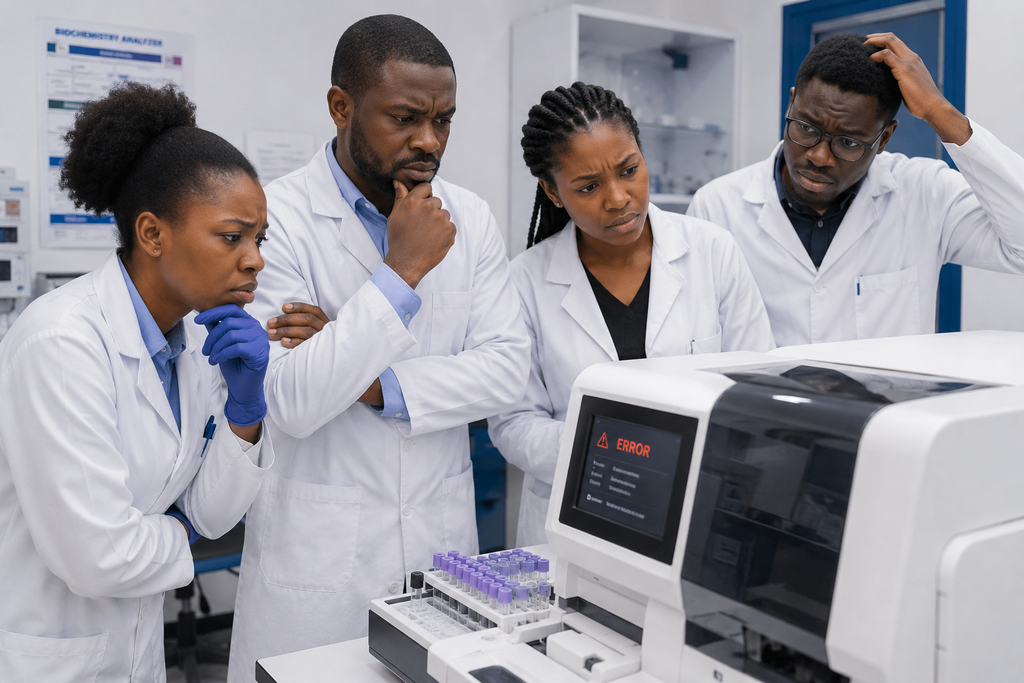
Not Every Equipment Problem Is an Equipment Failure
Sometimes, the analyser really does have a technical fault. Equipment requires maintenance, calibration, servicing and timely technical support.
But there is another possibility laboratories need to consider:
The equipment is working. The operator simply doesn’t know what it is telling them.
A missed cleaning procedure.
An incorrectly handled reagent.
An unfamiliar error code.
A maintenance step that was overlooked.
A setting that was changed without understanding its effect.
These may appear to be equipment problems when the underlying issue is actually a knowledge or training gap.
And that distinction matters.
Because replacing an analyser will not solve a problem caused by the person operating it.
When the Manual Isn’t Enough
Laboratory equipment comes with manuals for a reason. But knowing where the manual is does not necessarily mean knowing how to confidently operate the equipment.
Good user training should answer more than:
“Which button do I press?”
It should help operators understand:
- What the equipment is communicating through its alerts and error codes
- What routine maintenance should be performed and when
- How reagents should be handled
- Which troubleshooting steps are appropriate
- Which actions could compromise performance
- When an issue can be resolved by the operator
- When technical support should be contacted
- How poor equipment handling can affect result reliability
The goal isn’t simply to teach someone how to start an analyser.
It is to help them understand the analyser well enough to recognise when something is wrong, respond appropriately and know when to stop troubleshooting.
The Risk of Having “That One Person”
Almost every laboratory has one.
The person everyone calls when something goes wrong.
They know the analyser inside out. They remember the maintenance routine. They recognise the error code before anyone else. They know what usually works.
They are invaluable.
But there is a problem.
What happens when they are not there?
They go on leave.
They change shifts.
They move to another organisation.
Suddenly, knowledge that was sitting comfortably inside one person’s head becomes an operational gap.
That is not a training system.
It is a single point of failure.
A laboratory should not depend on one person’s memory to keep critical equipment running.
Knowledge needs to be shared, documented and reinforced across the team.
Confidence Is Part of Equipment Performance
There is also a human side to equipment operation that is easy to overlook.
When an operator encounters an unfamiliar warning, they may hesitate.
They may restart the machine.
Try a different setting.
Ask a colleague.
Repeat something that worked last time.
Or, because they don’t want to appear inexperienced, attempt to solve a problem they don’t fully understand.
Good training changes that.
A confident operator knows what to check first.
They know what not to touch.
They understand when a warning matters.
And they know when the smartest thing to do is call for technical support.
That confidence can reduce unnecessary downtime and help protect the quality of laboratory operations.
Equipment Is an Investment. Training Protects the Investment.
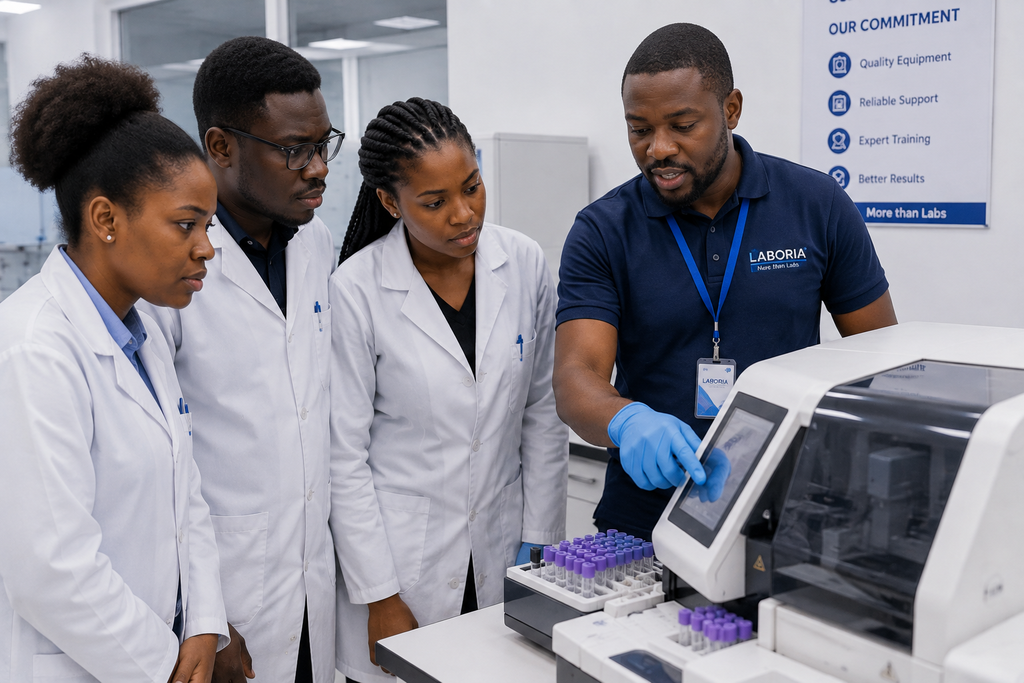
Laboratories invest significantly in diagnostic equipment.
But purchasing the analyser is only one part of the investment.
Installation matters.
Reagent management matters.
Preventive maintenance matters.
User training matters.
Technical support matters.
And the competence of the people using the equipment matters.
Because even a reliable analyser can underperform when it is poorly maintained, incorrectly operated or used by people who have not received adequate training.
At the end of the process is something much bigger than a machine.
A result.
And behind that result is a patient, a clinician and a healthcare decision that may depend on it.
Ask Your Team This Question
There is a simple test every laboratory can conduct.
Ask:
“If our most experienced equipment operator didn’t come in tomorrow, could the rest of the team confidently run this analyser?”
If the answer is yes, that’s a good sign.
If the answer is no, you may have identified a training gap before it becomes an equipment problem.
At Laboria, we believe equipment handover should never be the end of the relationship.
From installation and user training to technical support and equipment care, our goal is to help laboratories get more from the equipment they invest in.
Because sometimes, while everyone is staring at the machine, the real solution is standing right in front of it.
Is your team confident enough to recognise the difference?
Contact Laboria to discuss your laboratory equipment training and support needs.
Laboria. More than Labs.