
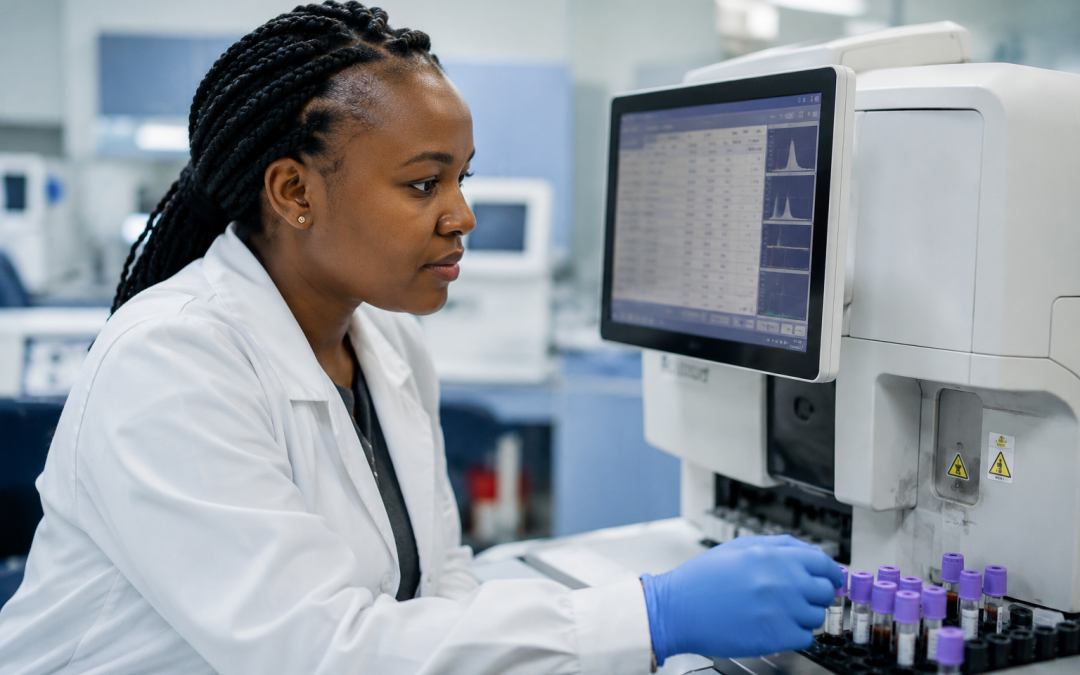
When people think about quality healthcare, they often think of experienced doctors, skilled nurses and life-saving medicines.
What rarely comes to mind is the laboratory.
Yet every day, laboratory diagnostics influence some of the most important decisions made in healthcare. From confirming infections to monitoring chronic diseases and guiding emergency treatment, clinicians depend on accurate laboratory results to provide the right care at the right time.
Without reliable diagnostic services, even the most experienced healthcare professionals are forced to make decisions with incomplete information.
Why Diagnostic Capacity Matters
Diagnostic capacity is more than having a laboratory or purchasing expensive equipment.
It is the ability of a healthcare facility to consistently deliver accurate, timely and reliable test results.
This depends on several factors working together:
- Modern and appropriate laboratory equipment
- Qualified laboratory professionals
- Preventive maintenance
- Reliable reagent availability
- Quality assurance processes
- Responsive technical support
When one part of this system fails, the quality of patient care can suffer.
The Reality in Nigeria
Nigeria continues to face significant healthcare challenges, and diagnostics remain an important part of the solution.
According to the World Health Organization’s Nigeria Health Systems & Services Profile, approximately 80% of public health infrastructure is estimated to be dysfunctional, with ageing infrastructure, inadequate maintenance and equipment-related challenges affecting healthcare delivery.
These limitations often result in:
- Delayed diagnoses
- Increased referrals to other facilities
- Longer patient waiting times
- Higher operational costs
- Reduced patient confidence
For hospitals and laboratories, the consequences extend beyond patient care. Every diagnostic service that cannot be delivered in-house represents a missed opportunity to improve efficiency, generate revenue and strengthen patient trust.
Diagnostic Equipment Alone Is Not Enough
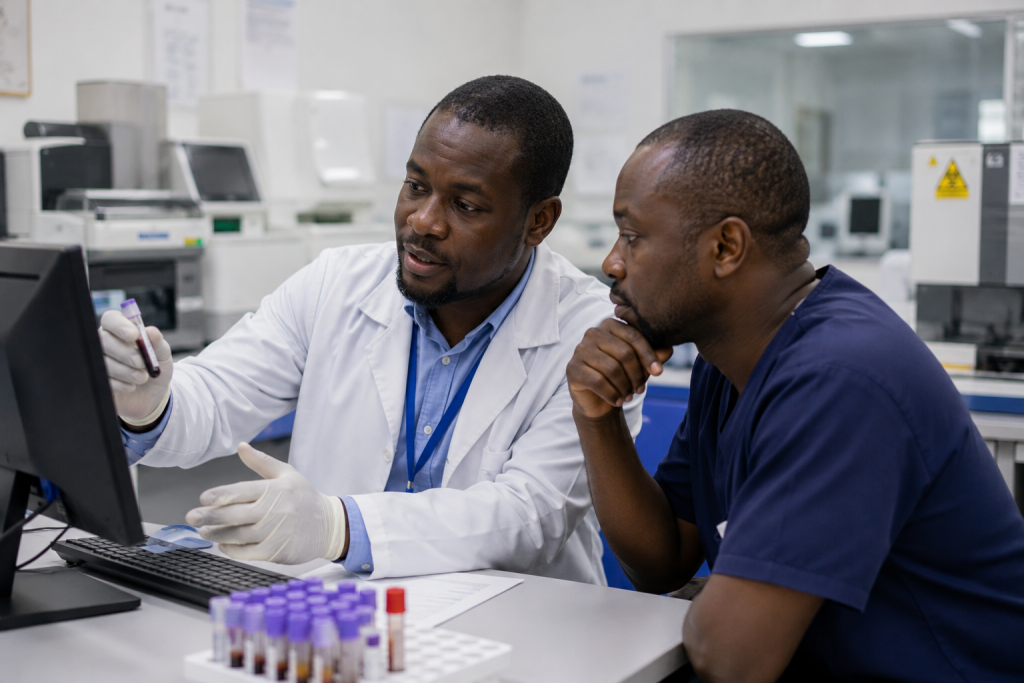
Investing in laboratory equipment is an important first step, but equipment alone does not guarantee reliable diagnostics.
Healthcare facilities also need:
Regular Preventive Maintenance
Routine servicing helps minimise unexpected breakdowns, extends equipment lifespan and improves performance.
Professional Installation and Calibration
Proper installation ensures equipment operates according to manufacturer specifications from the very beginning.
Continuous Staff Training
Technology continues to evolve. Ongoing training helps laboratory professionals maximise equipment capabilities while maintaining quality standards.
Access to Technical Support
When challenges arise, timely technical support helps minimise downtime and keeps laboratory operations running smoothly.
Reliable Supply of Consumables and Reagents
Even the most advanced analyser cannot function without the consumables needed to produce accurate results.
The Impact on Patient Care
Reliable diagnostics improve healthcare in measurable ways.
Healthcare providers can:
- Make faster clinical decisions.
- Reduce unnecessary referrals.
- Improve turnaround time for results.
- Increase patient confidence.
- Support better treatment outcomes.
For patients, that means receiving answers sooner.
For clinicians, it means making decisions with greater confidence.
For healthcare facilities, it means delivering more comprehensive services while improving operational efficiency.
Building Stronger Laboratories for Better Healthcare
As healthcare demand continues to grow across Nigeria, strengthening diagnostic capacity should remain a priority for hospitals, diagnostic centres and healthcare investors.
Reliable laboratories do not happen by chance. They are built through strategic investment in equipment, maintenance, people and systems.
Healthcare quality depends not only on treating disease but also on identifying it accurately and promptly.
Every reliable diagnosis begins with a laboratory that is equipped to deliver dependable results.
How LABORIA Supports Healthcare Providers
At LABORIA, we understand that delivering quality diagnostics requires more than supplying equipment.
We work alongside hospitals, laboratories and healthcare providers to strengthen diagnostic capacity through:
- Quality laboratory equipment
- Professional installation and commissioning
- Preventive maintenance services
- Technical support
- User training
- Access to quality reagents and consumables
Our goal is simple: to help healthcare providers build laboratory systems they can rely on every day.
Because when diagnostic systems perform at their best, healthcare performs at its best.
Conclusion
Behind every successful treatment is an accurate diagnosis.
And behind every accurate diagnosis is a laboratory that has the equipment, expertise and support needed to deliver reliable results.
Investing in diagnostic capacity is not simply an investment in technology. It is an investment in better clinical decisions, greater patient confidence and stronger healthcare outcomes.
At LABORIA, we believe that improving healthcare starts by strengthening the laboratories that make informed care possible.
Looking to strengthen your laboratory’s diagnostic capacity?
Laboria partners with hospitals, diagnostic centres and healthcare providers to deliver quality laboratory equipment, preventive maintenance, technical support and training that keep diagnostics running reliably.
Contact our team today to learn how we can support your laboratory.