
How Point-of-Care Testing Is Transforming Healthcare Across Africa

Imagine This…
A patient walks into a healthcare facility complaining of chest discomfort and persistent fatigue.
The clinician reviews the patient’s history, performs an examination and considers several possible causes. Before the next clinical decision can be made, everyone pauses.
The patient waits. The clinician waits. The nurse waits.
The answer is no longer in the consultation room. It is in the laboratory.
This is where Point-of-Care Testing (POCT) is changing the conversation by bringing selected diagnostic tests closer to where care is delivered.
What Is Point-of-Care Testing?
Point-of-Care Testing (POCT) refers to diagnostic testing performed near or at the location where the patient is receiving care instead of relying solely on a central laboratory. It complements, rather than replaces, the clinical laboratory by making selected tests available closer to the patient while maintaining appropriate quality standards.

Why Is POCT Becoming More Important?
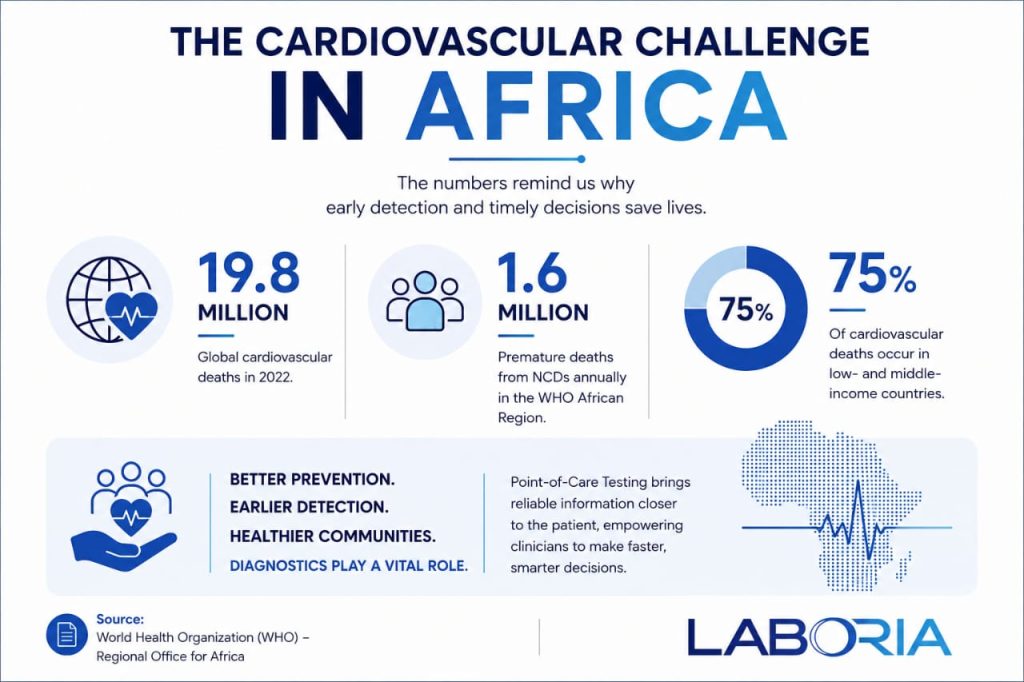
Healthcare systems are under increasing pressure to deliver faster, high-quality care. Africa also faces a growing burden of non-communicable diseases alongside infectious diseases. According to the World Health Organization, cardiovascular disease is the leading cause of deaths from non-communicable diseases in the WHO African Region, while approximately 1.6 million adults aged 30–70 die prematurely each year from one of the four major NCDs. Globally, cardiovascular diseases caused an estimated 19.8 million deaths in 2022, highlighting the importance of prevention, early diagnosis and timely access to diagnostics.
Where Does POCT Make the Greatest Difference?
POCT is commonly used for blood glucose monitoring, lipid assessment, blood gas analysis, haemoglobin measurement, urinalysis, coagulation testing and selected infectious disease screening. The suitability of each test depends on the healthcare facility, patient population and clinical workflow.
The Benefits Go Beyond Speed
Appropriately implemented POCT can help improve patient flow, reduce unnecessary referrals, expand access to diagnostic services, support preventive screening and provide clinicians with timely information for evidence-informed decisions.
Quality Must Always Come First
Reliable results depend on trained operators, routine quality control, proper storage of consumables, equipment maintenance, adherence to the manufacturer’s instructions for use and ongoing performance monitoring.

Choosing the Right Solution
Every healthcare facility has different needs. The best POCT solution is one that aligns with your patients, services, workflow and quality management processes rather than simply offering the longest feature list.
How LABORIA Supports Healthcare Providers
LABORIA partners with healthcare facilities by providing Point-of-Care Testing solutions, laboratory equipment, reagents, consumables and engineering support. We work with healthcare providers to identify solutions that fit their workflow while supporting quality laboratory practice.
Looking Ahead
The future of healthcare will be defined by better decisions supported by reliable diagnostics delivered at the right time. Point-of-Care Testing is helping make that future possible.
Contact LABORIA
+234 707 2314 981
hello@laboria.ng
www.laboria.ng
LABORIA
More Than Labs.